

66% Reduced ALF Falls, Find Out How
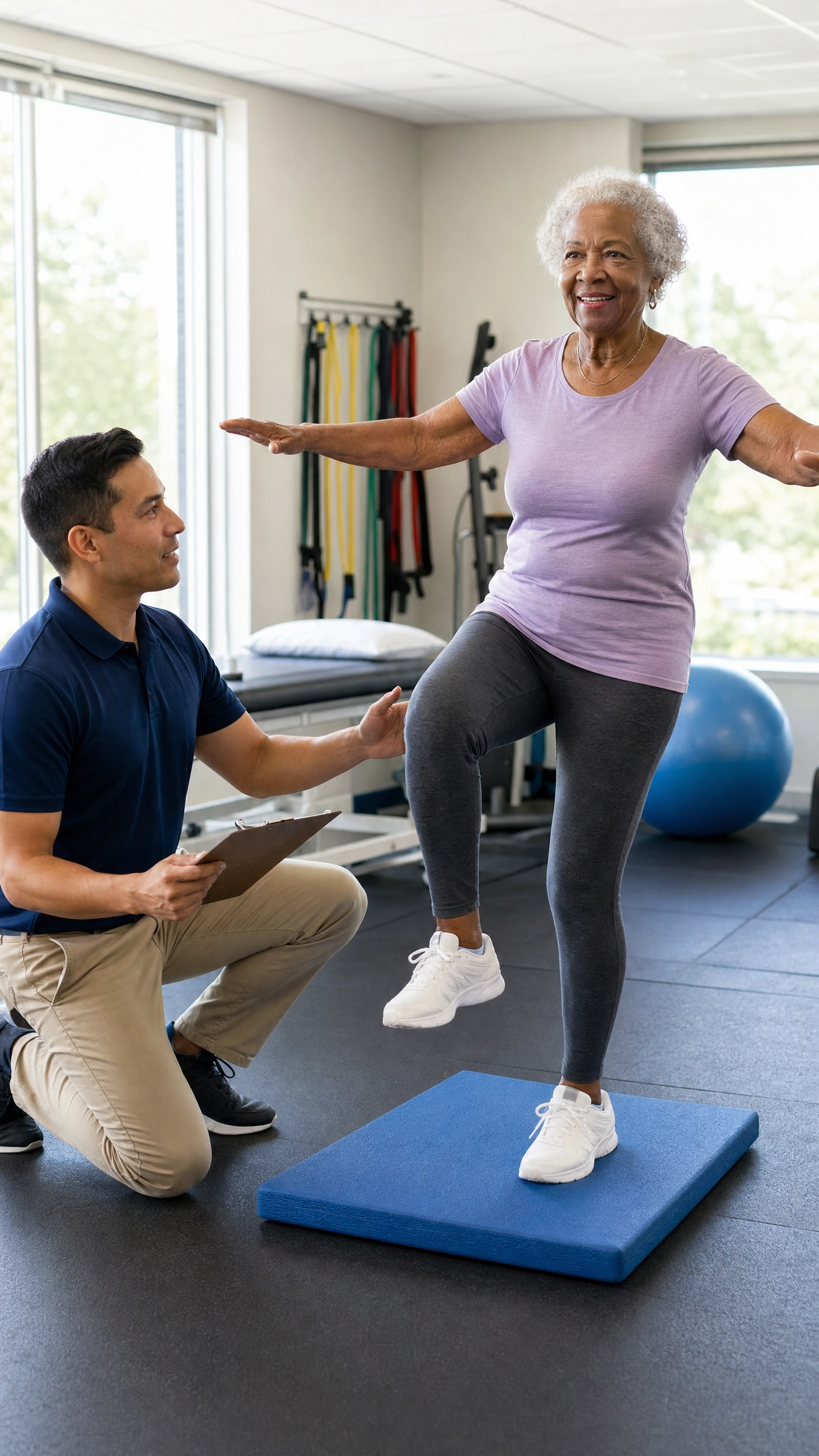
Identifying and addressing these factors forms the foundation of Sobe Rehab’s new S.A.F.E.R. Fall Prevention Program. Our comprehensive blend of early screening, staff education, targeted therapy, and ongoing monitoring can have a big impact on resident safety. In fact, one of Sobe Rehab’s partner assisted living communities recently reported a 66% reduction in falls after implementing our program!
Looking Beyond Balance Problems
Age-related declines in balance and stability are certainly key factors in increased fall risk. However, these issues only show a small piece of the puzzle. The truth is, falls rarely happen because of one single issue. More often, they occur when several risk factors overlap.
For example, a resident may have slightly diminished leg strength that doesn’t seem concerning on its own. But add arthritis-related joint pain, a medication that causes occasional dizziness, and impaired vision, and suddenly, everyday tasks become much more challenging. A simple trip to the dining room can require greater effort and concentration than before.
Recognizing these patterns is essential for resident safety. A resident who begins walking more slowly, avoids activities, or appears less steady than usual may be showing early signs of increased fall risk. Identifying these changes early allows the care team to intervene before a fall occurs.
Hidden Fall Risk Factors That Are Easy to Miss
Fear of Falling
This is perhaps one of the most overlooked fall risk factors, even though it can be extremely impactful.
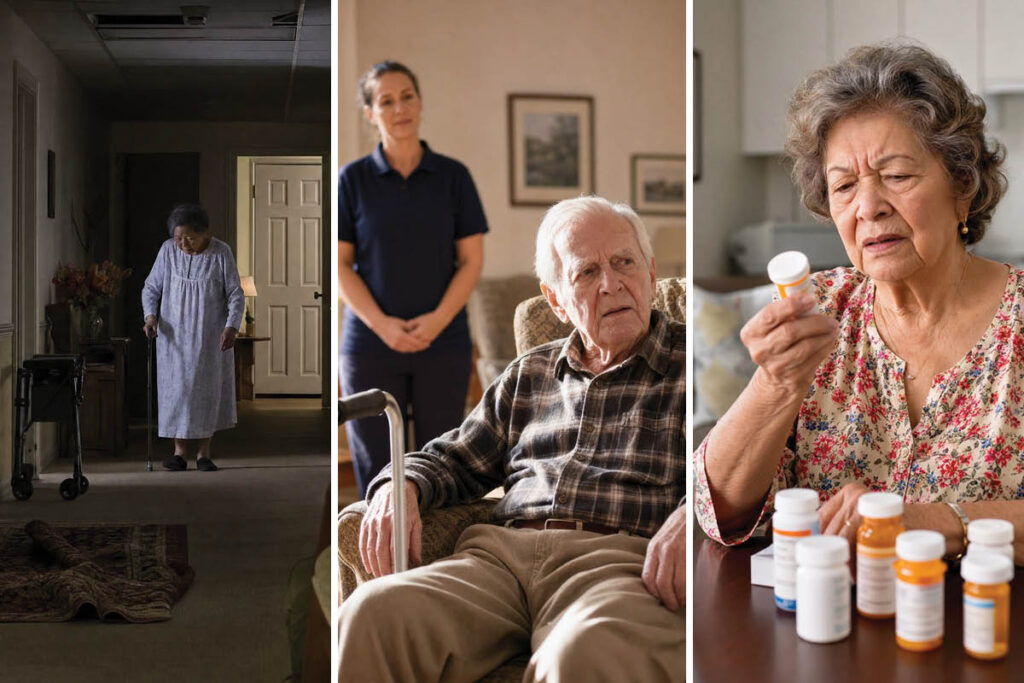
After a fall or near-fall, many older adults will become fearful about falling again and, as a result, may begin avoiding physical activity, such as exercise classes or afternoon walks. Over time, this lack of activity can lead to muscle weakness, decreased endurance, and poorer balance–all of which increase the likelihood of a fall.
Cognitive Changes
We tend to think of fall risk as a physical concern, but memory loss and reduced attention can affect safety awareness. Residents may forget to use their walkers or misjudge distances, only to suffer a fall.
Even mild cognitive changes can contribute to unsafe movement patterns.
Medication Interactions
Certain medications can cause dizziness, drowsiness, or reduced alertness, all symptoms that can worsen existing fall risk. It’s important to encourage residents to monitor any medication side effects and maintain communication between healthcare providers, caregivers, and therapy teams to address these concerns before they result in a fall.
Environmental Challenges
Falls often occur during routine activities that seniors perform every day. Often, the culprit in these cases is a problem in the environment: a burned-out lightbulb that reduces visibility, clutter in the hallway that wasn’t there before, or a loose rug that slides underfoot. That’s why creating a safer environment for residents is one of the most effective prevention strategies.
The S.A.F.E.R. Approach
The Sobe Rehab team designed our S.A.F.E.R. Fall Prevention Program to address a wide range of potential risk factors, from the most obvious to the most overlooked. Our proactive, result-driven approach focuses on five key areas:
Screen
Identify residents at risk through detailed assessments.
Assess
Review and analyze fall incidents to identify the specific underlying causes.
Follow-Up
Provide timely therapy interventions immediately following a high-risk screening, near-miss, or fall incident to proactively reduce the risk of future falls.
Educate
Train staff on safe transfers, supervision, and prevention strategies.
Reduce
Continuously monitor outcomes and implement risk-reduction measures.
Stronger Balance; Safer Communities
Fall prevention is ultimately about improving seniors’ day-to-day lives by preserving independence and boosting confidence so they can continue to participate in the activities they enjoy. By teaming with Sobe Rehab, you can help create a safer environment for everyone.
Contact us today to learn more about the role our S.A.F.E.R. Fall Prevention Program might play in reducing fall risk across your community.
Refer a Friend for a Chance to Win a Free Hour Massage

We Want to Hear Your Success Story!
Click the button below to tell your PT story and leave your review. We look forward to hearing from you!

July 4th Health & Safety Tips
Independence Day is a wonderful time to celebrate with family, gather for barbecues, and enjoy outdoor activities. A few simple movement habits can help protect your body so you can spend the holiday making memories instead of dealing with aches and pains.
1
Pace Your Activities
2
Lift Heavy Items Properly
3
Change Positions Often
4
Stay Hydrated
5
Listen to Your Body
6
Address Aches Early
Exercise Tip of the Month
Bridging
Workout Tracker

Cool off with these creamy Strawberry & Banana Popsicles, a naturally sweet treat made with simple ingredients and fresh fruit. They’re easy to make, refreshing on a hot day, and perfect for sharing with family and friends.